Start with the actual appointment
An English-language hospital website does not confirm who will interpret at your consultation, during a test or when instructions are explained. Ask the booking team to confirm the arrangement for your appointment, rather than relying on a general description of the hospital.
Keep three tasks separate: interpreting a spoken conversation, translating a written document, and explaining the clinical meaning of a result. Ask who will do each task and how you can raise a question if something is unclear. This guide offers a preparation method; it does not verify or recommend an interpreter service in China.
A language-support timeline
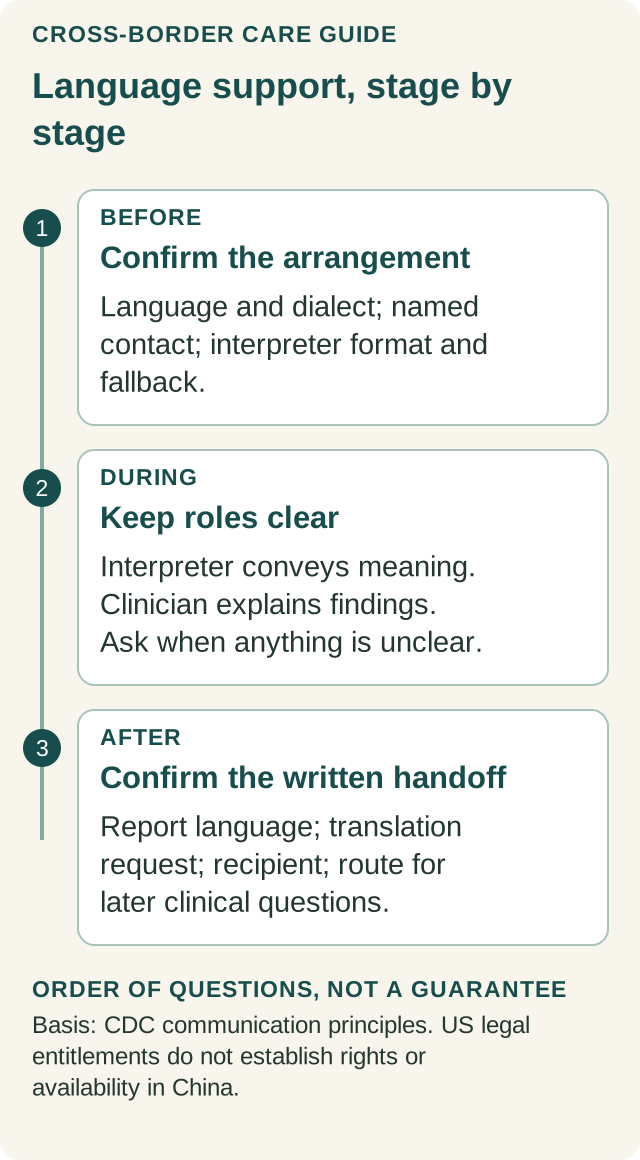
Figure: language support before, during and after a visit. This original planning aid applies communication principles from the CDC Yellow Book chapter on language access. That chapter concerns US refugee, immigrant and migrant care. Its US legal and free-service provisions are not evidence of entitlements, prices or availability in China. The connecting line shows appointment order, not a guaranteed service pathway.
Before the visit: get an arrangement you can describe
Tell the booking team which spoken language and dialect you prefer, and which language you need for written information. The CDC distinguishes those preferences and advises confirming the dialect when arranging interpretation.
Use the following questions to make the proposed arrangement specific:
- Is the clinician consulting in my preferred language, or is a separate interpreter being arranged?
- Does the language support cover registration, the consultation, tests and instructions, or only one part of the visit?
- Who confirms the interpreter, and will the support be in person, by telephone or by video?
- What charges, duration and cancellation conditions apply? Who can explain confidentiality and any information-sharing arrangements?
- If that person or connection is unavailable, whom should I contact and what should I ask the clinical team about proceeding?
Record the answer, the confirming contact and the appointment date. Mark a request as unconfirmed until the responsible team answers. A travel companion or administrative escort should not be assumed to be the agreed interpreter.
During the visit: keep the clinical question with the clinician
The CDC describes interpretation as conveying spoken meaning between patient and healthcare professional. Its practical advice includes allowing time, using short statements and asking for clarification when information is unclear.
Ask everyone to identify their role at the start. Address questions about the meaning of findings or the proposed care to the clinician, using interpretation as needed. If a phrase, number or instruction is unclear, ask the clinician to explain it again through the interpreter. Do not fill the gap by guessing what the speaker intended.
After the visit: confirm the written handoff
Before leaving, ask which documents will be provided, in what language, by whom and when. Clarify whether a translated report is included or requires a separate request. Agree how later questions will reach the clinical team and whether interpretation will be available for that conversation.
Keep the original document alongside any translation so the receiving team can identify what was translated. For the separate task of arranging the next clinician conversation, use the medical-travel follow-up handoff plan.
Sources checked on 23 October 2026. The checklist is an editorial planning resource, not a statement that a named hospital provides language support or that a particular arrangement is clinically sufficient.